
2035: From EHS & ESG “Software” to the Planetary Compliance Nervous System
Transforming compliance from a cost center into a control system

Fifteen years ago, the big prediction was modest: environmental data would stop living inside consultants’ private databases and move to the web, shared, client-controlled, and always accessible. At the time, this sounded like a workflow improvement.
It wasn’t.
It was the first domino.
Once environmental, health & safety (EHS) and ESG data become truly web-native and multitenant, artificial intelligence stops being a feature and starts becoming the operating system. We are still behaving as if compliance is a paperwork industry with better UI. But the web, real web infrastructure, not “a hosted copy of desktop software”, makes a much more radical future inevitable. We still talk about EHS and ESG as if they were paperwork industries with improved user interfaces. We buy software and bolt-on features, and pretend that the future is “the same process, but faster.” We argue about definitions, we chase assurance, we polish disclosures like they are passports into the kingdom of legitimacy. We did not invent the light bulb by improving on candle design. We did not invent the electric motor by improving horse-drawn carriages.
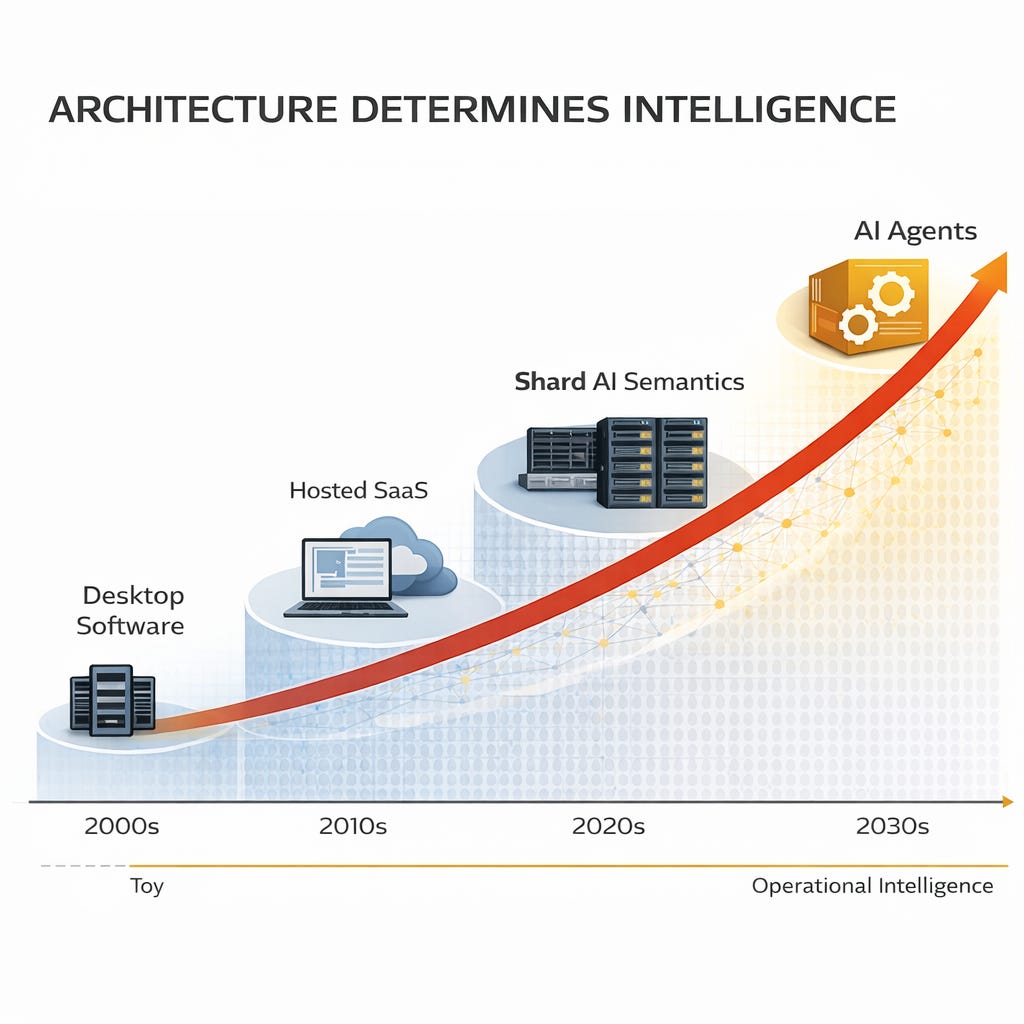
This is the uncomfortable truth: architecture determines intelligence. Not dashboards. Not modules. Not “AI add-ons.”
Why web-native, multitenant systems matter more than any feature list
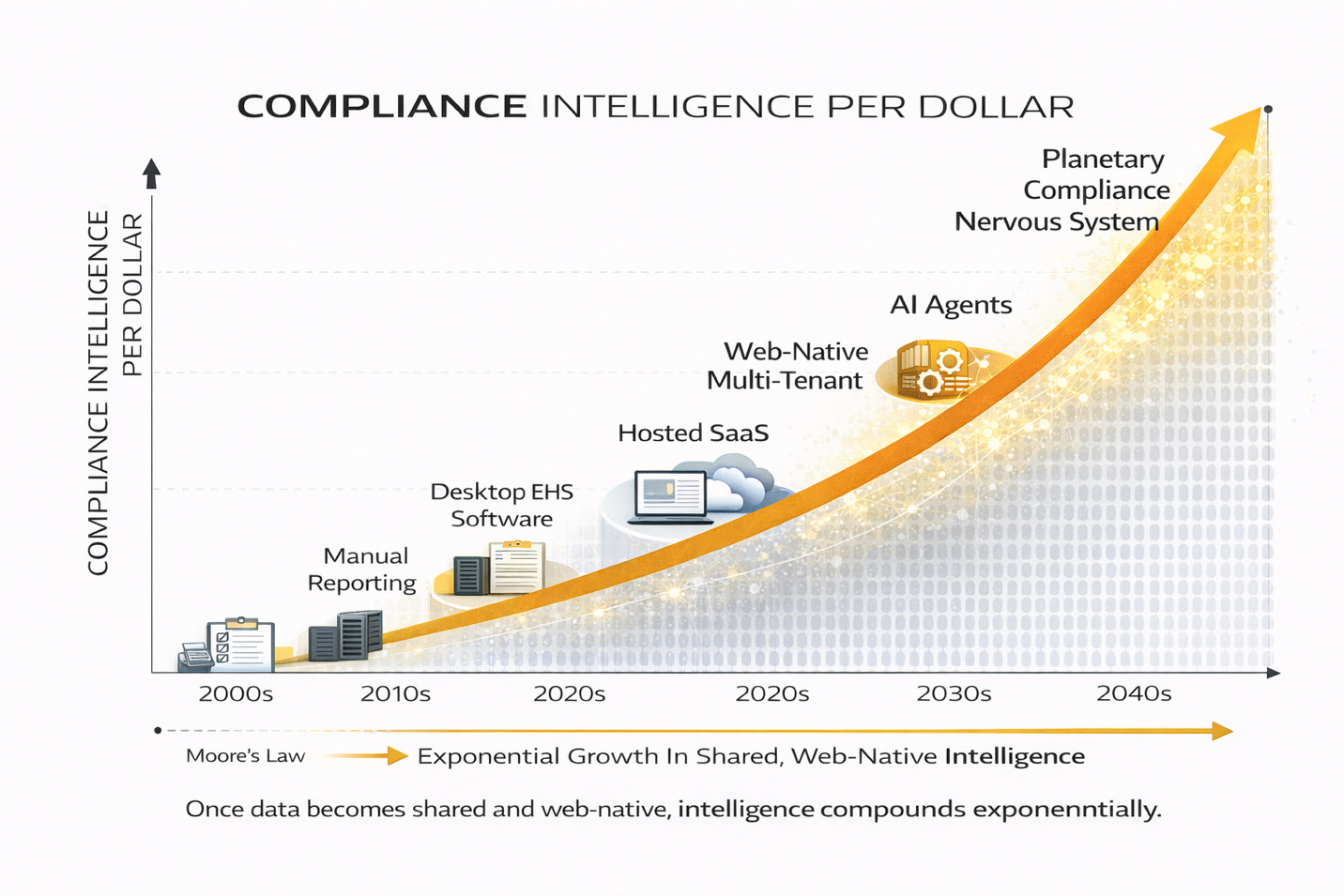
AI does not thrive in isolation. It thrives in a shared context, standardized semantics, and a continuous signal.
A web-native, multitenant architecture quietly changes everything. First, it forces semantic discipline. When thousands of organizations operate on a shared platform, there is inevitable pressure to adopt common definitions for emissions events, incidents, permit limits, scope boundaries, and controls. That shared grammar is what allows intelligence to emerge. AI trained only on one company’s data is not just limited; it is biased by design. Intelligence trained across many organizations, under strict permissioning, begins to approximate reality.
Second, it creates real network effects. When one facility improves sensor mapping, anomaly detection, or corrective-action logic, those improvements do not die in a consultant’s slide deck. They propagate as platform capabilities. Knowledge stops being tribal and starts being cumulative.
Third, it enables continuous compliance. Web systems are built for streams and APIs, not quarterly uploads. That is the difference between reporting what happened and controlling what happens next. Compliance shifts from periodic reconstruction to real-time supervision.
Finally, AI requires shared infrastructure, not exports. If data must be uploaded, transformed, reconciled, and explained every time, AI remains a toy. If data is born structured, permissioned, and machine-readable on the web, AI becomes trustworthy enough to act.
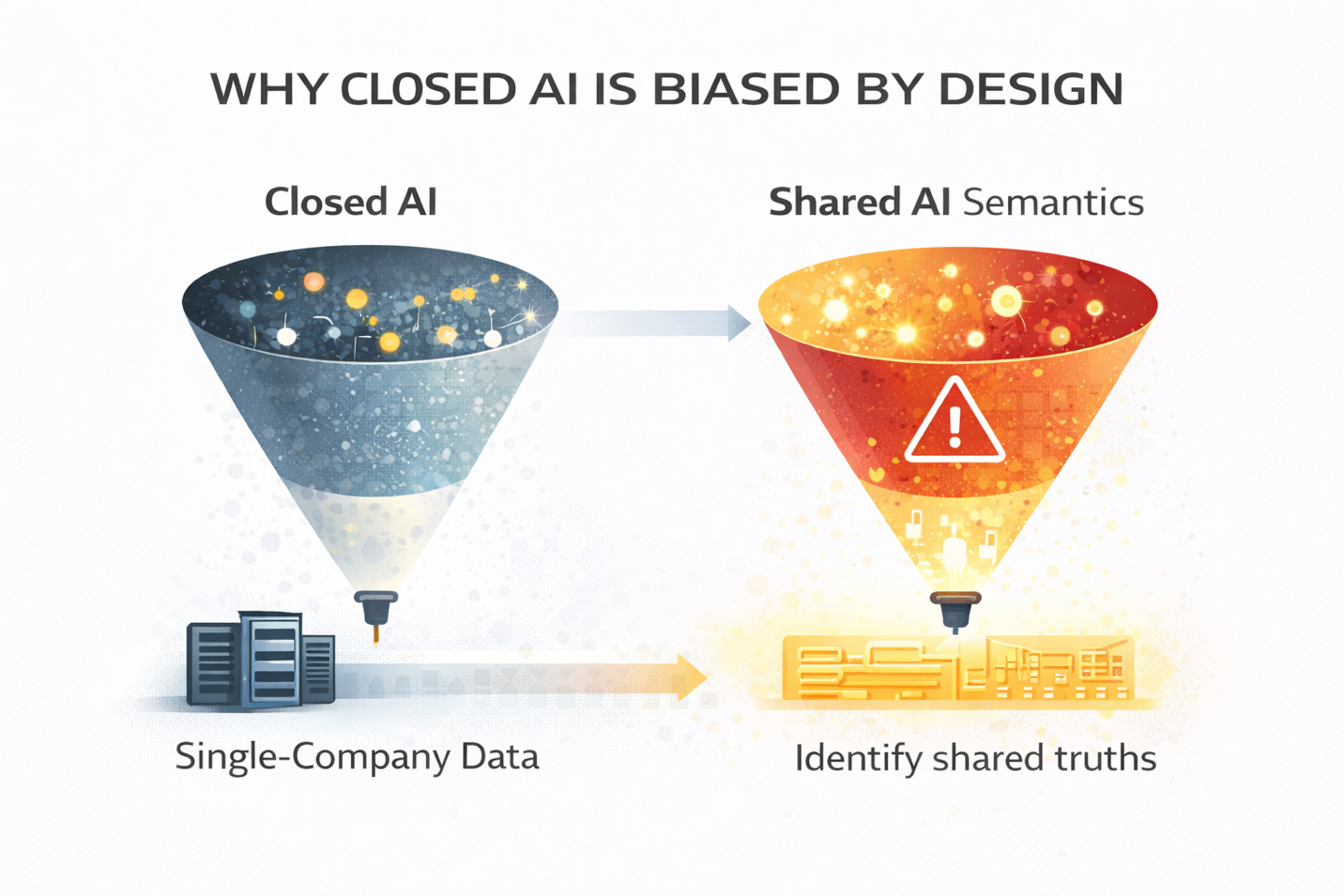
This is where today’s conversation still falls short. We argue about “AI features” while ignoring the fact that closed, company-specific AI syntheses are often less reliable than humble rule engines operating on shared truth.
The 2035 prediction: compliance dissolves into infrastructure
By 2035, EHS compliance and ESG management will no longer look like software you buy. They will look like infrastructure—like GPS, like internet routing, like a public utility.
The system will not be centralized in the political sense, but it will be globally integrated in the physical sense. Supply chains do not stop at borders. Emissions do not respect jurisdictions. Climate and exposure risks are planetary externalities. Maintaining parallel, company-by-company ledgers becomes economically irrational.
Instead, organizations “dip into” a shared environmental ledger, a global compliance substrate, contributing verified activities, emissions, and operational signals. Regulators do not pull reports from companies. They subscribe to the system’s signals.
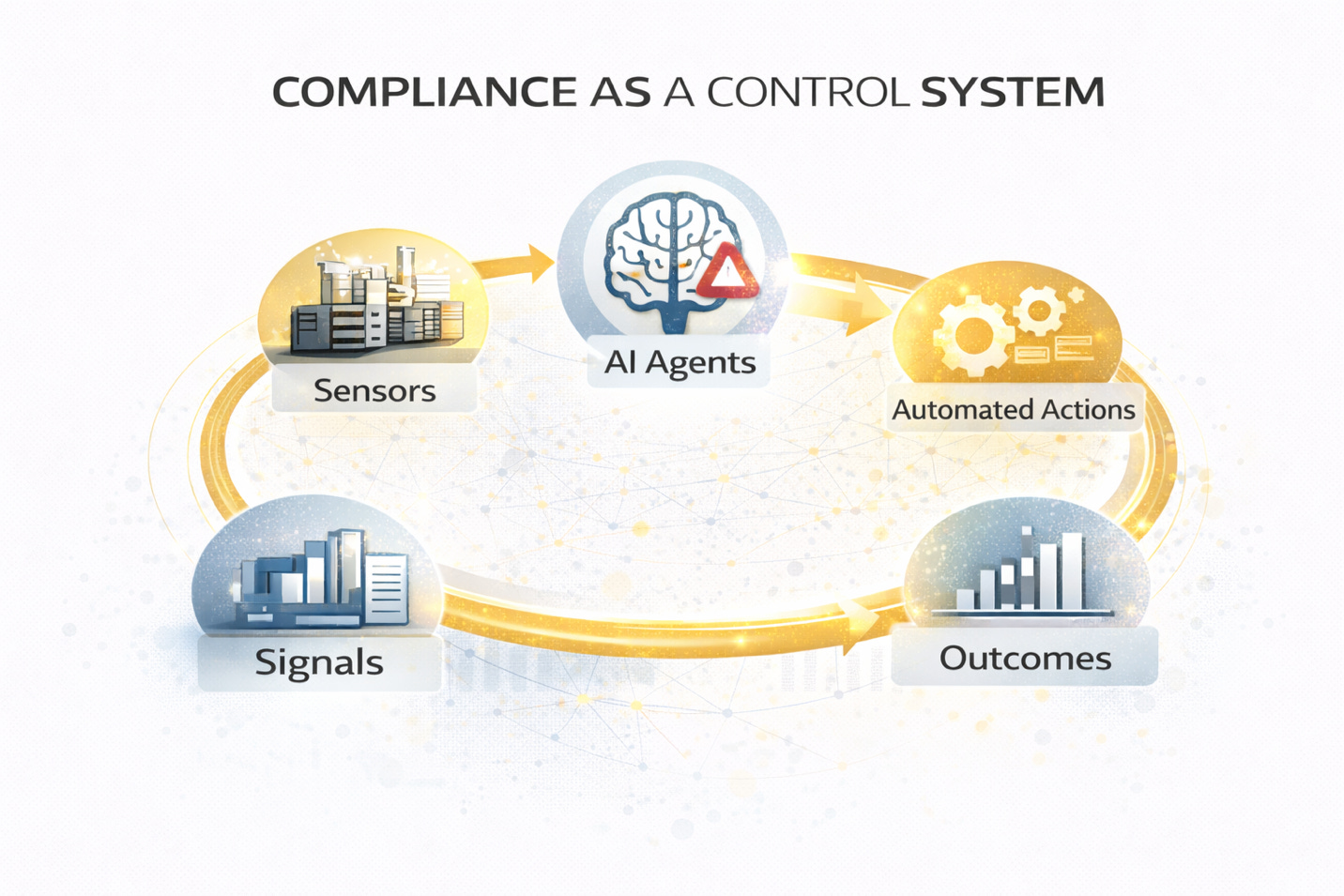
In that world, there are no PDFs to submit. The system itself is the report.
Compliance becomes continuous monitoring, continuous verification, and continuous exception handling. As long as operations remain within allowable limits, nothing happens. When limits are approached or exceeded, the system responds immediately based on rules derived from industry type, geography, permit constraints, ecosystem sensitivity, and evolving public thresholds.
This is not bureaucracy scaled up. It is control theory applied to planetary systems.
A self-managing compliance ecosystem
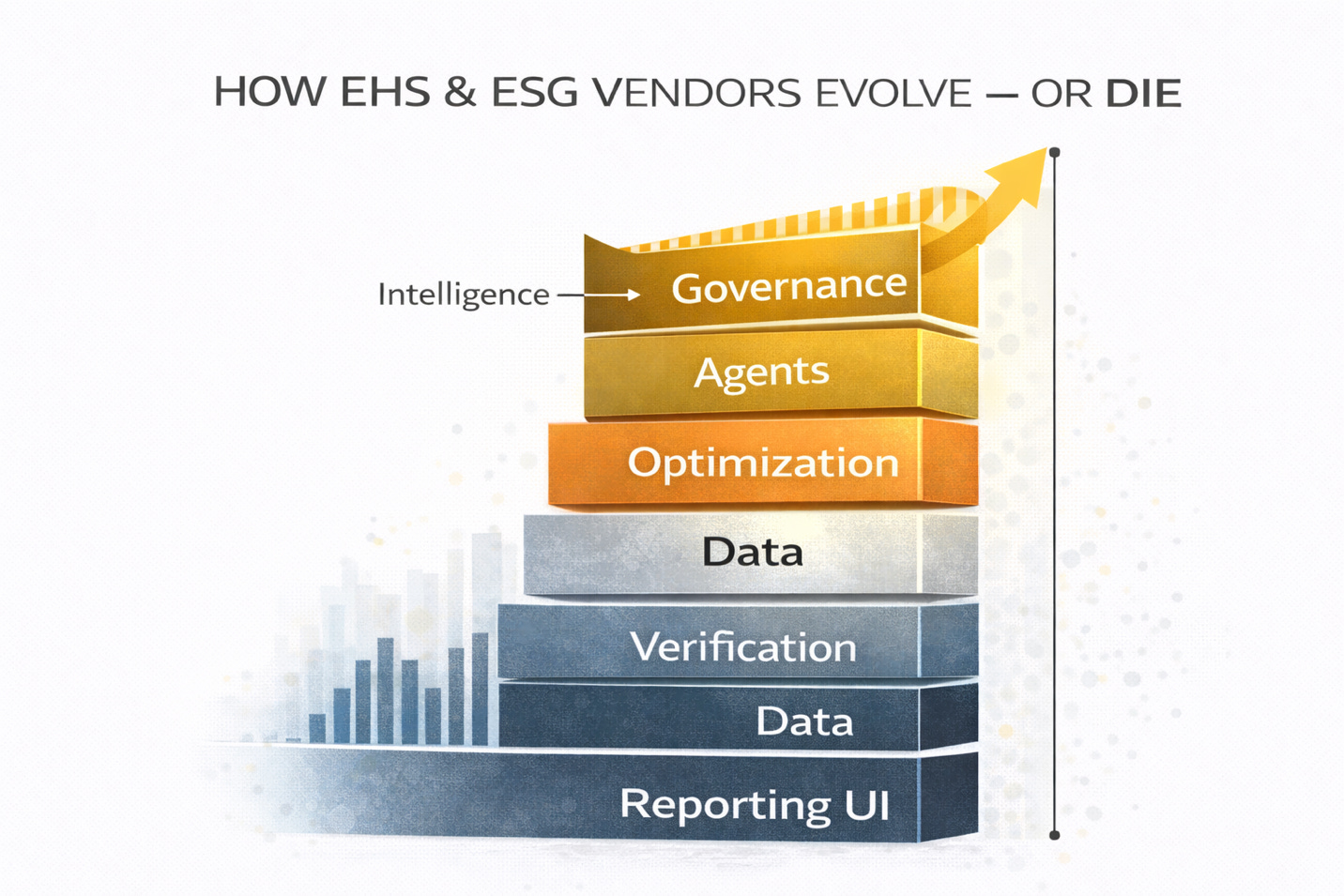
The dominant “software” layer in 2035 is not a monolithic application. It is a society of AI agents.
Some reconcile meter readings against production volumes. Others detect sensor drift, gaps, or suspicious regularity. Others propose corrective actions, simulate operational changes, or forecast exceedances before they occur. Still others dynamically negotiate workloads between plants, logistics networks, and energy sources to stay within constraints.
Human work changes fundamentally. People stop assembling evidence and start supervising decisions. Compliance professionals become system governors, not report preparers.
Importantly, these agents do not operate blindly. They operate on data with cryptographic lineage.
Whether implemented via blockchain or other append-only verification mechanisms, the requirement is the same: tamper-evident provenance at scale. Every datum has a source, a method, a timestamp, and a chain of custody. Trust becomes a property of the system, not a consultant’s reputation.
The global alarm bell
Today, exceedances are often discovered weeks or months after the fact, during audits, inspections, or internal reviews. In 2035, exceedances are machine-detected, context-aware, and instantly routed.
Notifications flow to the appropriate endpoints of the planetary nervous system: facility operators, corporate risk teams, regulators, insurers, impacted communities (in appropriate forms), and supply-chain partners when relevant. Insurance pricing adjusts. Capital costs shift. Procurement decisions respond.
This is where ESG stops being moral signaling
Conclusions
By 2035, the most important shift will not be regulatory, technological, or even political. It will be cognitive. We will finally stop pretending that the planet can be governed through narrative artifacts, static PDFs, annual sustainability disclosures, press releases claiming carbon neutrality by 2050, consultant-authored summaries, and that they are submitted into institutional black holes and never meaningfully used again.
Compliance will no longer be something organizations “prepare.” It will be something they continuously inhabit.
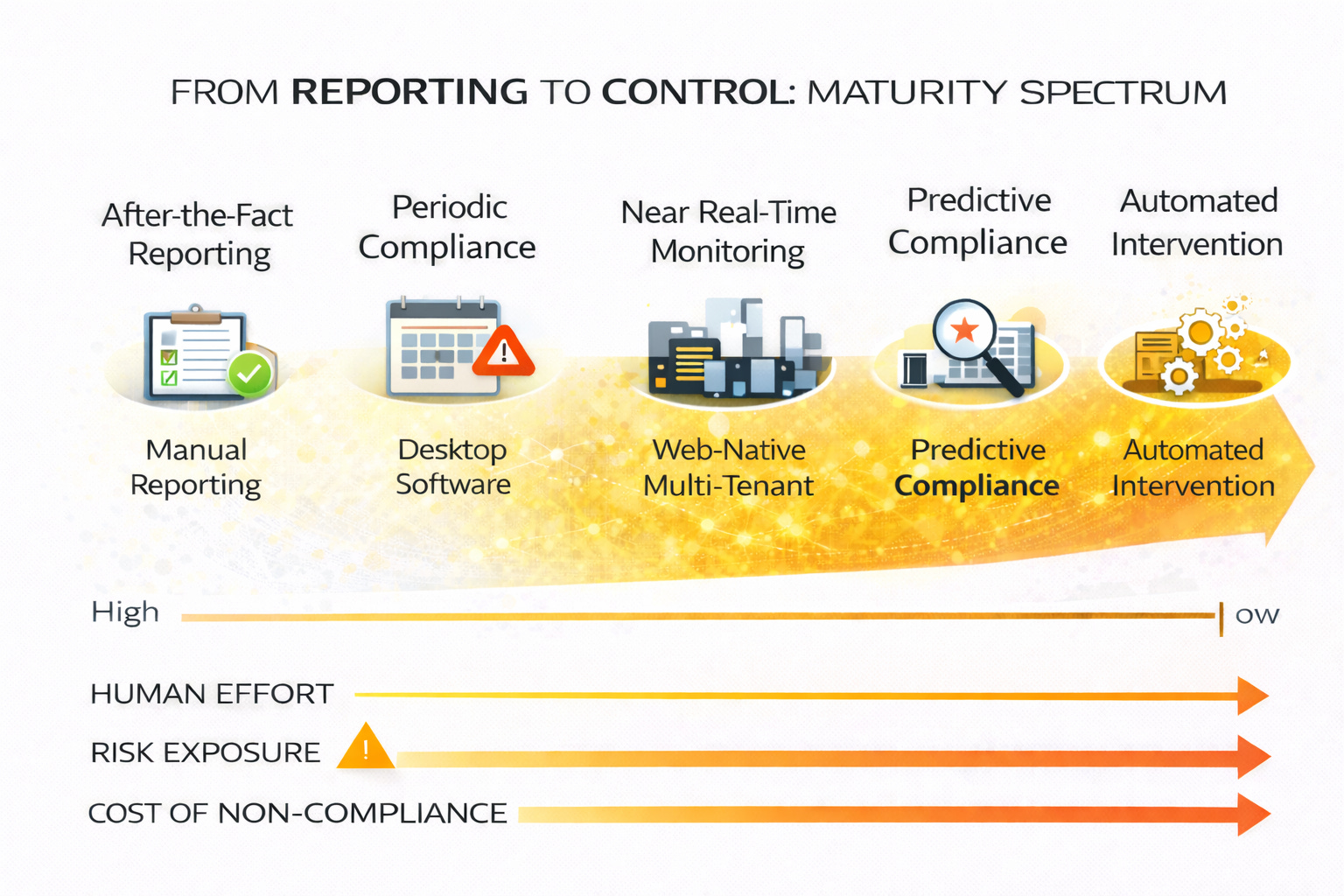
The transition from EHS and ESG “software” to a planetary compliance nervous system marks the end of episodic accountability and the beginning of persistent truth. Signals will flow directly from physical reality—air, water, soil, infrastructure, operations—into shared, machine-readable systems of record. Regulators, investors, insurers, operators, and communities will observe the same underlying telemetry, in near real time, with interpretation layered on top rather than buried inside reports.
This does not make governance easier. It makes it unavoidable.
In such a world, performance cannot be staged, delayed, or cosmetically improved at reporting time. Risk is visible early. Impact is measurable continuously. Responsibility shifts from storytelling to stewardship. Organizations that still optimize for disclosure theater will look increasingly anachronistic, like accounting firms insisting on handwritten ledgers in the age of continuous audit.
The quiet truth is that this future is not waiting on breakthrough science or new regulation. The sensors exist. The networks exist. The platforms exist. What has been missing is the willingness to abandon comforting rituals in favor of uncomfortable clarity.
2035 is not the end of EHS or ESG. It is the end of pretending that they were ever about reports in the first place.